How to Read a Rod Specification
A rod's power (ultra-light, light, medium, medium-heavy, heavy) describes how much force is needed to bend the blank. A rod's action (fast, moderate-fast, moderate) describes where in the blank the bend occurs. Fast action bends near the tip, providing better casting accuracy and sensitivity. Moderate action bends further down the blank, loading more of the rod during casting — useful for smaller lures and treble-hook baits where a slow bend absorbs head shakes.
Line rating and lure weight are printed on the rod blank near the handle. Staying within the listed range prevents breakage and gives the rod its intended feel.
Trout Gear in Canadian Waters
Canadian freshwater trout species include brook trout, lake trout, brown trout, and rainbow trout. Each occupies different water types, but the gear that covers the most ground for stream and river trout — brook and brown — starts with light-to-medium power.
Rods and Reels
A 6'0"–6'6" spinning rod rated ultra-light to light, with fast action, covers most stream trout situations. Paired with a 1000–2000 series spinning reel, this setup handles 4–8 lb monofilament or fluorocarbon comfortably. Fluorocarbon has lower visibility in clear water and slightly better abrasion resistance against rocks — both relevant for stream trout fishing.
For lake trout in open water, step up to a medium-power 6'6"–7'0" rod with a 2500 series reel and 10–15 lb braided line with a fluorocarbon leader. Lake trout run deep through much of the season and require enough backbone to set a hook at distance.
Lures and Presentations
- Inline spinners (Mepps Aglia, Worden's Rooster Tail): 1/16 to 1/4 oz, gold or silver blade. Consistent producers for stream brook trout, particularly in spring and early summer. Cast across current and retrieve at moderate speed.
- Small spoons (Thomas Buoyant, Little Cleo): 1/8 to 3/8 oz. Effective for deeper lake trout and for rainbow trout in larger rivers. Flutter on the drop.
- Soft plastics (2" curl tail grubs, small swimbaits): Rigged on a 1/16 oz jig head. Work well in slower pools and for pressured fish.
- Live bait — worms, minnows: Permitted in most trout waters, though some BC and Ontario waters restrict bait to artificials. Worms fished under a float account for a significant portion of brook trout caught by casual anglers.
| Target | Rod | Line | Primary Lures |
|---|---|---|---|
| Brook Trout (stream) | 6'0" UL–L, fast | 4–6 lb fluoro | Inline spinners, small spoons, worms |
| Rainbow Trout (river) | 6'6" L–M, fast | 6–8 lb fluoro | Spinners, drift rigs, small swimbaits |
| Lake Trout (deep water) | 7'0" M, fast | 10–15 lb braid + leader | Spoons, tube jigs, swimbaits |
Walleye Gear
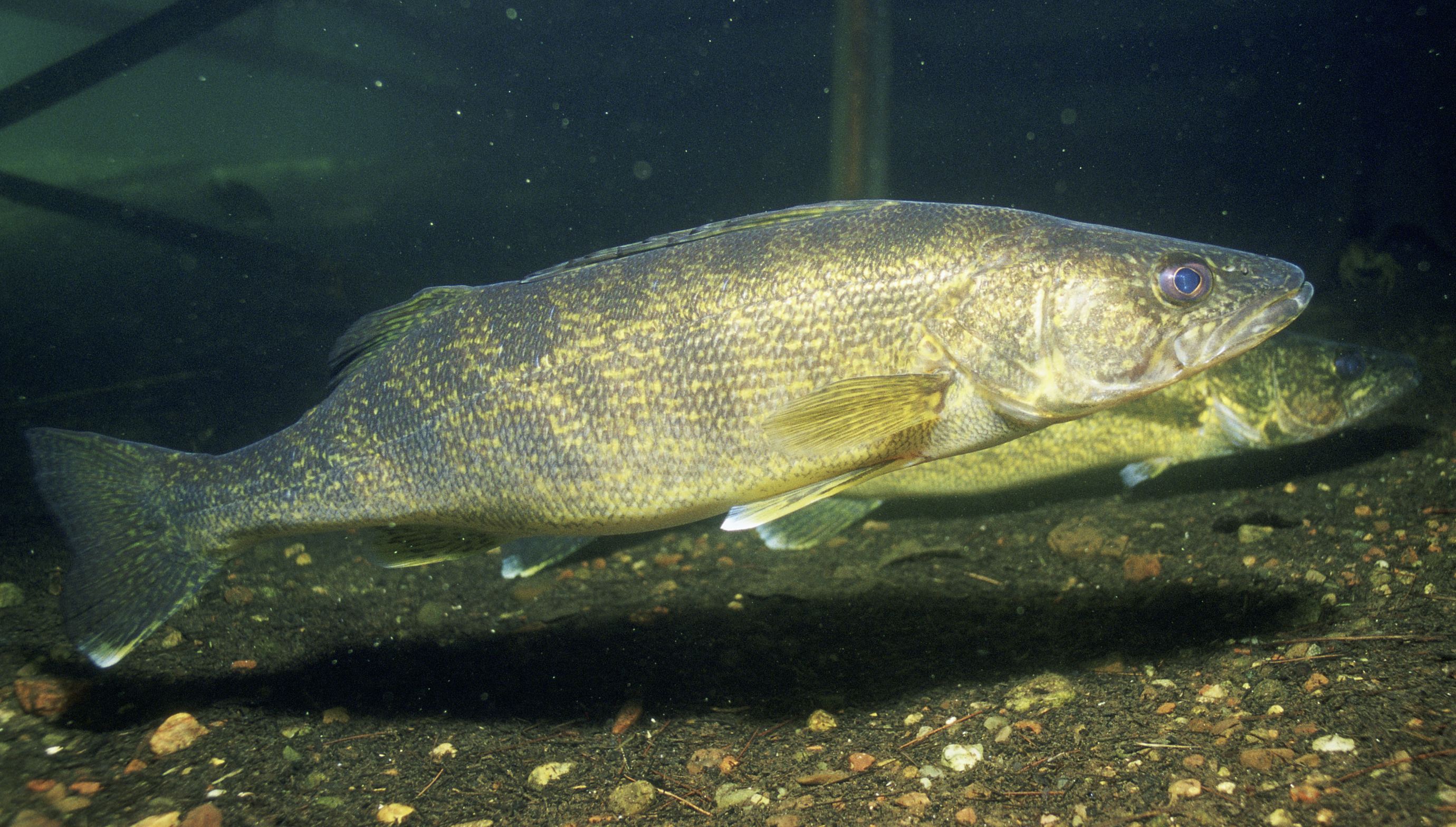
Walleye are one of the most-targeted freshwater species in Ontario, Manitoba, and Saskatchewan. They're structure-oriented, light-sensitive, and have a habit of being found in slightly different depth ranges depending on time of day and season. A good walleye setup needs to cover both jigging near bottom in 15–30 feet and casting or trolling across flats in 6–12 feet.
Rods and Reels
The walleye fishing community has largely standardized on medium-power, fast-action spinning rods in the 6'6"–7'0" range, matched to a 2500–3000 series reel. Braided line in the 8–10 lb range with a 6–8 lb fluorocarbon leader provides the sensitivity needed for bottom-contact jigging while handling the modest fight that walleye offer.
Some anglers prefer a medium-light rod for finesse jigging in clear water, particularly in the fall when walleye can be reluctant to commit. A softer tip detects the subtle pickup that walleye are known for — they often just stop the lure rather than striking aggressively.
Lures and Presentations
- Jig and minnow (1/4–1/2 oz ball-head jig, 3–4" shiner or sucker minnow): The most consistently productive walleye setup across Canadian waters. Fish along rocky points, drop-offs, and gravel humps. The scent and movement of live bait activates walleye that ignore artificials.
- Jigging spoons (Swedish Pimple, Acme Kastmaster): Particularly effective in fall and through ice when walleye are deeper. Vertical presentation, short hops off bottom.
- Soft plastic paddletails (3–4" Berkley Powerbait, Z-Man SwimmerZ): Work well when rigged on a 1/4–3/8 oz jig head. Good alternative when bait restrictions apply.
- Crankbaits (Rapala Original Floater, Shad Rap): Trolled along structure edges in the 5–15 foot range during morning and evening. Size #5–7, shad and perch patterns.
Northern Pike Gear
Northern pike are widely distributed in Canadian freshwater — present in most Ontario lakes, throughout Manitoba, Saskatchewan, and the northern reaches of every Prairie province. They're ambush predators found in weed edges, shallow bays, and the mouths of tributary creeks. They hit hard, run fast, and have teeth that cut through monofilament with ease.
Rods and Reels
Pike require a step up in power. A medium-heavy to heavy, 7'0"–7'6" fast-action spinning or baitcasting rod handles the lure weights involved (3/4 oz to 2 oz) and the force needed to drive hooks through a pike's hard jaw. A 4000–5000 series spinning reel, or a low-profile baitcaster, spooled with 30–50 lb braided line is standard.
A wire leader — typically 12"–18" of 20–30 lb single-strand or multi-strand wire — is non-optional. Fluorocarbon leaders of sufficient strength (40 lb+) can work in clear water situations, but wire is the reliable choice. Bite-offs on pike without a leader are a near-certainty.
Lures and Presentations
- Large spinnerbaits (3/4–1.5 oz, single or tandem Colorado blade): Retrieve through weed edges and over submerged vegetation. Pike track the blade flash and hit on the fall or when the retrieve pauses.
- Surface lures (prop baits, hollow-body frogs, Zara Spook): Particularly effective in summer over shallow weed flats. Early morning and late evening produce the most surface strikes.
- Large swimbaits and soft jerkbaits (5–8", paddle tail or shad-style): Rigged on 1 oz+ jig heads or swim jig frames. Retrieve with a steady pace and occasional pause — pike often hit on the pause.
- Trolling with large Rapala CD Magnums or Jake Lures: Covers water efficiently on large lake systems. 6–10 foot running depth on a flat line, no planer required in most pike habitat.
| Species | Rod Power / Action | Line | Leader | Primary Lures |
|---|---|---|---|---|
| Walleye | M, fast, 6'6"–7'0" | 8–10 lb braid | 6–8 lb fluoro | Jig + minnow, crankbait, soft plastic |
| Northern Pike | MH–H, fast, 7'0"–7'6" | 30–50 lb braid | Wire, 12–18" | Spinnerbait, swimbait, topwater, crankbait |
Seasonal Adjustments
Ice-out through mid-June: trout and pike are in shallow water. Light gear and smaller lures work. Walleye are on gravel spawning beds — in Ontario, walleye season is closed through late April to early May depending on the zone to protect spawning fish.
Midsummer: trout retreat deeper or to cold tributary inflows. Walleye go deeper during the day but move shallow at dusk. Pike remain accessible in weeds through midsummer.
Fall: one of the best periods for all three species. Trout feed heavily before ice-up, walleye school on structure, and pike prowl weed edges as vegetation dies back. Gear stays the same; lure colors shift toward natural forage patterns — perch, cisco, and shad profiles over bright attractor patterns.
Gear Restrictions to Know
Certain Ontario and BC waters require barbless hooks — check the regulation summary for any body of water you plan to fish. Some Quebec and BC trout streams allow artificial lures only, banning all live and dead bait. Maximum hook size and treble hook restrictions apply on some salmon rivers in BC and Ontario steelhead tributaries.
The Department of Fisheries and Oceans oversees salmon and some trout species under federal mandate in addition to provincial rules — two sets of regulations can apply on the same water.
Gear restrictions, hook rules, and bait bans change. Confirm current regulations for the specific water body you plan to fish using the applicable provincial regulations guide. This article reflects general practices and publicly available information as of early 2025.